
Religious beliefs divide people so badly, you would think nobody can be married to someone who worships differently from them, but can they? Find out why interfaith marriages can be not only strong, but long lasting, and how to make your interfaith marriage work.
Faith and religion are important- sometimes more important than anything. If your relationship with your god is the number one relationship in your life, it can seem difficult if not impossible to be married to someone who worships differently than you. People do it every day, so can you? Join SpiritualBlossom to find out why interfaith marriage is not only possible- but can be possible for you. Find out the pros and cons of interfaith marriage, how to have simple interfaith dialogue- with anybody- and simple tips to making interfaith marriage work. Maybe you love someone who loves a different god than you- you can still make a marriage work. Read on to find out how.
What are Interfaith Marriages?
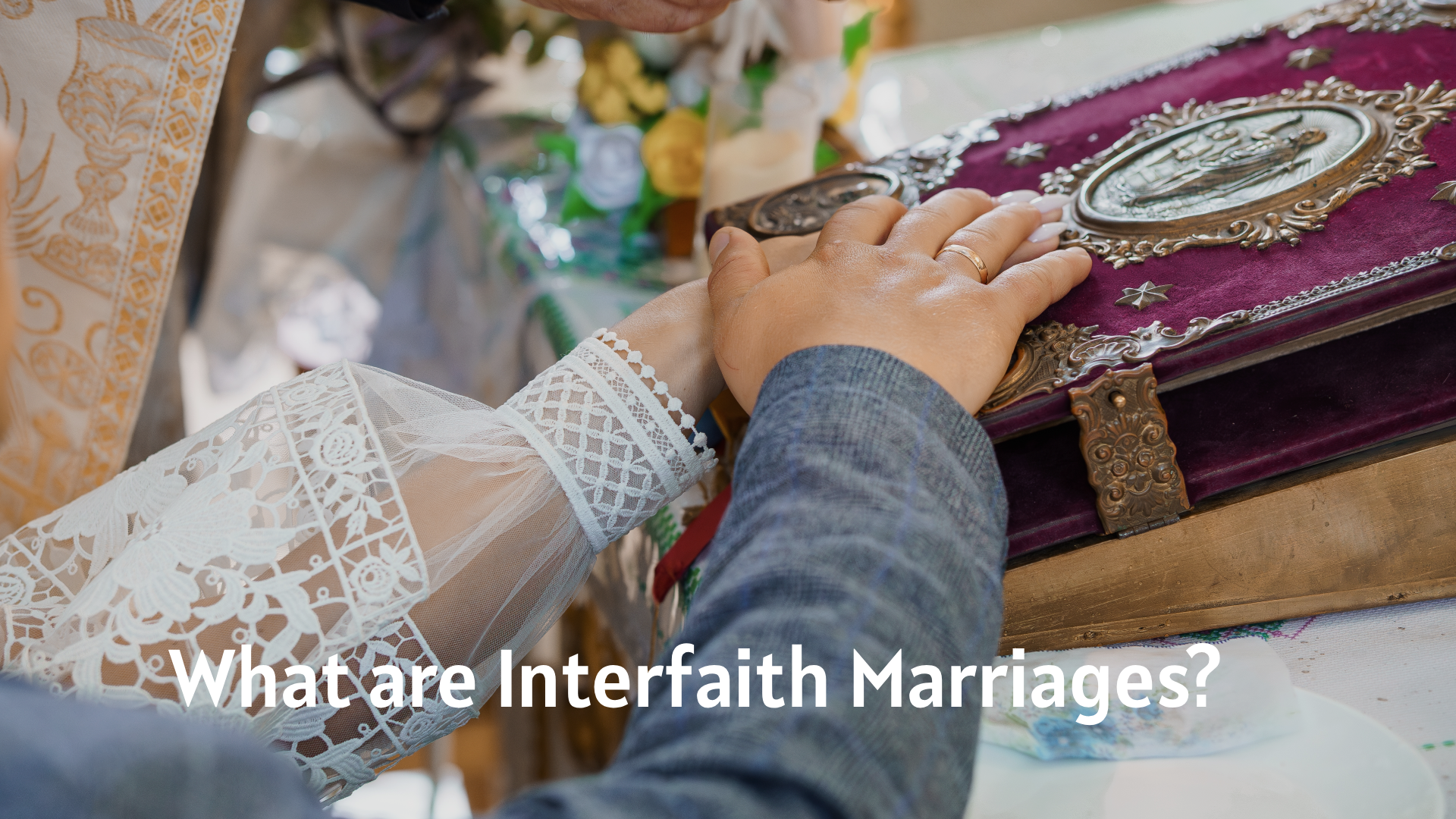
Inter faith marriages are marriages between people of different religions. As recently as 2022, the Pew Research Center says about 1/4 of American marriages are interfaith marriages. That's a lot. They say that more couples are in interfaith relationships than ever before and some of those interfaith relationships are even between people who are religious and someone who isn't. In the UK, statistics were slightly similar. 79% of people polled said that they were in a relationship with someone whose religion was similar. That means about 21% were in mixed faith marriages Read more from Psychology Today here: Interfaith Relationships Are Becoming Common. Do They Work? | Psychology Today
Interfaith marriage is controversial to some people. Some people believe that their religion is the only valid one and it is forbidden to marry someone outside of their religion. Some religious adherents believe that it is their responsibility to convert everyone to their own religion, so they wouldn't even date someone who doesn't worship the same way as them. Some people believe that god is too big to fit into one religion and fighting over religion is pointless. They say that everyone has a right to believe the way that they see fit and that no one should dictate who we should worship. Some people don't believe in the existence of a God or a goddess at all, and call themselves atheists. Some atheists don't want to be with people who are religious at all because they don't want that type of lifestyle.
Worldwide, Christians and Muslims make up about 50% of the religious people on the globe. As of 2010. At that time, one in six people had no religious affiliation at all. Out of all of the billions of people in the world, it's possible that any of those people would fall in love with anyone else, and being forbidden to marry due to religion would be unacceptable to most of them. What you believe about religion dictates who you associate with. Belief is very important. Find out about the power of belief here: What Happens When You Believe? Why it Matters
The of Pros Interfaith Relationships
For people who believe that there is only one god or one legitimate religion, they may see no benefits of interfaith relationships or marriages, but other people disagree. One of the biggest benefits of being in an interfaith relationship is that you expose yourself to other belief systems. You learn about other people's religions, and you get to do something else- pray with people who are different from you. A lot of people are too afraid to pray with a member of a different religion, or talk to a different god. Plenty of other people who have done it said that they really felt themselves connected with other people when they did.
When you are exposed to a different belief system and it doesn't change your beliefs, it strengthens your faith. It provides an environment of mutual understanding and promotes peace, harmony, and brotherly love amongst people who are different from one another. It also shows you how much more alike we are than different. For example, all major world religions have commandments teaching us how to treat one another properly. Harmonizing including compromise is something a lot of faiths teach. Learn the power of compromise here: The Power of Compromising
The Cons of Interfaith Relationships

Not everyone is comfortable being in interfaith relationships. Some people prefer to associate only with people who believe exactly the same way that they do. It is difficult if not impossible for them to have interfaith dialogues, and they don't want to hear what other people believe. Some people have a shaky faith foundation and being around people who believe differently from them creates doubts in their minds. Other people don't doubt their faith, but it is difficult, if not impossible for them to be in a relationship with someone whose beliefs differ greatly from theirs because they feel like they're with people who they don't belong with.
One of the biggest problems that being in an interfaith marriage can create for couples as if their families are not supportive. Some people estrange themselves from their families if their family condemns their significant other. Losing contact with family can be unbearable if not impossible for people. The culture of your personal family will decide whether it’s an issue or not. Some people emotionally cannot risk upsetting their families to that extent. Is staying in a dysfunctional family worth it? Read here to find out: Are Relationships with Your Relatives Worth It?
Having an Interfaith Dialogue
Maybe you have never had an interfaith dialogue before and you don't know how to get started, so you don't know if you would ever be in an interfaith marriage or not. There are some do’s and don'ts to making interfaith dialogue happen. The first thing that you need to keep in mind is that no two people agree on every belief, even within the same religion. Keeping that in mind, there are some dues and then some don'ts.
Do
To make interfaith conversations happen, the first thing you have to do is have an open mind. Then you have to listen and ask questions if you don't understand. Share openly your own beliefs and let people ask you questions too.
Be Open
The attitude that your religion holds all truths, and no other religion does cannot be on your mind if you want to have effective inter faith communications. You have to be open to the possibility that a member of another religion understands god, understands the way the world is, and has wisdom to share. Some people think of religion as an accurate reflection of god. Other people think of each religion as a toolkit that helps people to establish a relationship with whoever they believe god is. If you think of it in that way, you will think of religions as different toolkits to make that relationship happen. Read about the Hindu goddess Kali here: Kali Ma Goddess of Creation and Destruction
Listen and Ask
Listening to what other people say is extremely important for interfaith dialogue. The last thing you want to do is shut down and make people feel like they weren't heard. If you don't listen, you will miss an opportunity to learn something. Listening to someone who practices a religion that's entirely different from yours might be more confusing than enlightening at first. Don't be afraid to speak up and ask for clarification. Most people who go for interfaith dialogue are expecting confusion and are more than happy to answer whatever questions you may have.
Share Openly
Since you're going to be listening, at some point it will be your turn to talk. Sharing your faith experience, your beliefs, and explaining what those are to people who believe differently than you is a big part of the interfaith experience. People will be just as interested in what you have to say as sharing what they have to say. The right words will come to you, and people will appreciate your openness. A little humility makes you a great speaker, especially when you are answering questions. Read about the benefits of being humble here: Humbleness - The Art of Defeating Your Ego
Don’t
There are things that you could make the mistake of doing that would shut down the interfaith communication immediately. Trying to bully people into believing exactly the same thing that you believe is a problem, so don't do it. Don't stop listening, or refuse to speak. Don't accuse people of being bad people for their religious beliefs either.
Proselytize
Proselytizing about religion is trying to convert someone to your religion. That attitude has no place in interfaith communication. Monotheistic faiths especially preach to their adherents that there is only one way to god and that they have the way. They tend to preach that anyone who worships differently is walking around in darkness and it is their member’s responsibility to convert everybody to their religion. Walking into an interfaith communication with that attitude is the wrong way to do it. If you can't get past that mindset, you may as well not go.
Shut Down
Don't close your mind when it's time for someone else to share. You don't have to believe the same things they believe, or even agree with their beliefs at interfaith dialogues. Just listen and understand that everyone has different beliefs. When it's your chance to talk, speak up. People are there to learn, be supportive, and go away feeling good that they have expanded their knowledge of religions. You will be surprised by how quickly you will make friends when you open yourself to listening and sharing with different people. If you're nervous about public speaking, you can benefit from assertiveness training period. Read more here: Learn to Be Assertive and Speak Your Truth
Accuse
The worst thing you could possibly do at interfaith dialogue is to accuse someone who believes differently than you of believing the wrong thing. If you accuse them of worshipping some kind of an evil being, of living an unclean life, or of wandering around in spiritual darkness, you've just shut down the communications. That would create an environment of intolerance, deeper divisions, and hurt feelings. That's exactly what you don't want.
Making Interfaith Marriages Work
There are a few things you can do as a couple to make your inner faith relationship work. Education, stimulated by healthy curiosity, as well as celebrating together are things to make your relationship work. Honoring your differences as opposed to emphasizing them, and then letting your children choose what they believe are all great ways to make an interfaith marriage work.
Get Educated

Education about your loved ones beliefs is the number one thing to make interfaith relationships work. If you understand what they believe and why they worship and live the way that they do, it will create harmony at home. If you are confused about something, it can make you uncomfortable, so find out. Going into their faith community with them, reading, and praying with them are always to become educated about your loved ones religion. Awareness of how you behave helps too. Learn about self-awareness here: Unlocking the Power of Personal-Awareness
Encourage Curiosity
Even though you practice different religions, it's important to encourage your significant other to explore your faith so they can understand it. That doesn't mean you two will suddenly start practicing each other's religions. It just means that you will have a healthy curiosity about each other's beliefs and practices. When your significant other sees you taking a genuine interest in their religious beliefs, it shows how important they are to you, and it supports your marriage nicely.
Celebrate Together
Some interfaith couples prefer to keep their practices completely separate, but there's no reason why you can't celebrate together. Attend worship services together, decorate the home together, taste each other's sacred foods, and pray together. Partake of one another's major celebrations, and make friends with each other’s friends and family who believe the way that they do. You may have a surprise spiritual awakening if you do. Learn more about spiritual awakenings here: Your Personal Spiritual Awakening Guide
Honor Differences
One of the most important things to do if you're going to be in an interfaith marriage is to honor and respect your differences. As a matter of fact, even if you practice exactly the same religion, you and your spouse are going to be different from one another in some ways. You're not the same person after all. Accept and celebrate your differences, and it will bring you closer together as a couple.
Let Your Kids Choose
Some people insist that their children should only practice their religion. There's nothing wrong with taking your children along with you to worship services, but demanding that they believe exactly what you believe will upset your children, and it could drive a wedge between you. Allow them to explore, learn, and believe what they personally believe. Couples who support one another and their kid’s right to choose beliefs are seen as a miracle, but are miracles real? Find out here; Do Miracles Really Happen?
One day you will fall in love and get married. Your significant other might worship differently than you, but that doesn't mean that your marriage will fail. Beginning interfaith dialogues by listening and asking questions and openly sharing is just one step toward making an interfaith marriage succeed. Being educated about other faiths, celebrating together, honoring your differences, and letting your children choose how they're going to believe are some very simple ways to make an interfaith relationship work. Interfaith marriages are not a good idea actually- they are a great idea! May you honor, celebrate, and respect one another's beliefs as a couple all the days of your life. So be it.
Would you like more ways to make your mixed faith marriage work? Reach out to one of our psychics today to find out!
About the Author: Lady Saoirse has studied magic and lore for most of her life but started walking her own Magical Path after being spiritually reborn in the desert. Today she is a High Priestess for The Temple of the Goddess, she is a psychic advisor and spiritual counselor, she shares her gifts as a Psychic and Content Writer for Mysticsense and SpiritualBlossom, and she writes for PaganPages.Org emag and Green Egg Magazine.